

An in-depth discussion about HostAway accounting and bookkeeping using popular accounting software, QuickBooks. Accordingly, we provide chart of account templates, show how to properly classify transactions, discuss financial reporting, vacation rental taxes and overview how to automate vacation rental bookkeeping. We link to various business models, including property managers, property owners, co-hosts and arbitrage operators.

This guide is a comprehensive method of accounting for those who need to follow thorough accounting guidelines due to state or local requirements around trust accounts. The trust account itself is delegated by a bank or financial institution for (usually) licensed property managers or real estate brokers to collect funds on behalf of property owners.
Read More QuickBooks for HostAway: Trust Accounting for Property Managers

For short-term rentals, many jurisdictions do not require licensing or strict trust accounting rules for managing short-term stays on behalf of owners. In this guide, we present an alternative accounting method for those in vacation rental property management who do not use a trust account.
Read More QuickBooks for HostAway: Property Management without Trust Accounting

Rental Arbitrage is a business model where an operator rents a property from an owner on a master lease and subleases said property to guests on Airbnb, Vrbo or their own HostAway direct booking website. This business model thrives in markets where vacation rental short-term income potential is higher than local long-term rental prices.
Read More QuickBooks for HostAway: Rental Arbitrage Accounting

A vacation rental investment property is a business model in which an operator purchases a property and lists it on platforms such as Airbnb, VRBO or their own direct-booking website, with the goal of building equity more quickly than with a traditional long-term rental. This model is especially effective in markets where short-term rental income potential significantly exceeds local long-term rental rates.
Read More QuickBooks for HostAway: Investment Property Accounting

This guide provides an in-depth discussion of using QuickBooks for Airbnb. We include chart of accounts templates, explain how to properly classify transactions, discuss financial reporting and Airbnb taxes, and provide an overview of how to integrate Airbnb with QuickBooks. We also link to guidance for various business models, including property managers, property owners, co-hosts, and rental arbitrage operators.

An in-depth discussion about Airbnb accounting and bookkeeping using popular accounting software, QuickBooks Online & Xero. Accordingly, we provide chart of account templates, show how to properly classify transactions, discuss financial reporting, Airbnb taxes and overview how to automate Airbnb bookkeeping. We link to various business models, including property managers, property owners, co-hosts and arbitrage operators.

Year-end accounting should transition from compliance to strategy. This guide explains how short-term rental operators can use finalized financial statements to review insurance coverage, plan proactively with tax advisors, reassess financing options, and renegotiate key vendor relationships to strengthen their Airbnb accounting and support long-term portfolio growth.
Read More Year-End Strategic Financial Planning | Annual Airbnb Accounting Checklist

Airbnb’s 1099-K reports gross earnings, not what you actually receive, leaving many hosts unknowingly overpaying taxes. This article explains the hidden gaps, why the reported amounts don’t match your real payouts, and how to correctly deduct fees and refunds to avoid costly mistakes.

Airbnb payouts are more complex than they appear. This guide reveals the most common accounting mistakes hosts make – and how to fix them to ensure accurate, audit-ready financials.
Airbnb payouts rarely match your true earnings. Learn how to break down each reservation, categorize every line item correctly, and streamline reconciliation in QuickBooks Online – especially with Tallybreeze automating the process.

Before preparing your tax return, your books must be fully reconciled and finalized. This guide explains how short-term rental operators and accountants should verify account reconciliations, record accrual adjustments, review the Income Statement and Balance Sheet, and deliver clean financial statements to their tax advisor for accurate Airbnb accounting and tax preparation.
Read More Deliver Year-End Financials to Your Tax Advisor | Annual Airbnb Accounting Checklist
This guide walks you through how to import historical Airbnb, Vrbo, and Guesty transactions into QuickBooks using Tallybreeze, ensuring accurate records, clean categorization, and automated syncing for future reservations.
Read More How to Import Historical Transactions from Airbnb, Vrbo and Guesty into QuickBooks

Year-end payroll reporting consolidates the entire year’s wages, tax withholdings, and employer obligations into formal filings with strict deadlines. This guide explains how short-term rental operators and accountants should reconcile payroll reports, issue W-2 forms, complete required tax filings, and review employee benefits to keep Airbnb accounting and short-term rental bookkeeping compliant and organized.
Read More Payroll & Benefits Year-End Compliance | Annual Airbnb Accounting Checklist
Major property purchases and renovations should not always be treated as operating expenses. This guide explains how short-term rental operators and accountants should review capital expenditures, distinguish repairs from fixed assets, update depreciation schedules, and reconcile the fixed asset register to ensure accurate Airbnb accounting and compliant year-end financial reporting.
Read More Fixed Assets & Depreciation | Annual Airbnb Accounting Checklist
Occupancy taxes are one of the most commonly misrecorded parts of Airbnb accounting. This guide explains how to account for Airbnb occupancy taxes in QuickBooks Online, compare self-remittance versus Airbnb remittance, and automate accurate tax tracking with Tallybreeze.
Read More How to Account for Airbnb Occupancy Taxes in QuickBooks Online

Short-term rental businesses often rely on independent contractors such as cleaners, maintenance technicians, and service providers. This guide explains how to review annual vendor payments, determine which contractors require a 1099, verify W-9 information, and complete required filings to keep your Airbnb accounting and short-term rental bookkeeping compliant with IRS reporting requirements.
Read More Vendor Compliance & 1099 Reporting | Annual Airbnb Accounting Checklist

Occupancy tax compliance is a critical part of year-end Airbnb accounting. In this guide, we explain how short-term rental operators and accounting professionals should verify taxable revenue, reconcile taxes collected by Airbnb or directly from guests, confirm jurisdiction-specific filing requirements, and submit any required annual lodging tax returns to ensure accurate and compliant short-term rental bookkeeping.
Read More Year-End Occupancy Tax Compliance | Annual Airbnb Accounting Checklist

Before closing the year, review your recorded reservation revenue to identify discrepancies, timing differences, and misclassified fees or refunds. This set of tasks ensures your Airbnb accounting records remain accurate, compliant, and tax-ready.
Read More Reservation Revenue Year-End Review | Annual Airbnb Accounting Checklist
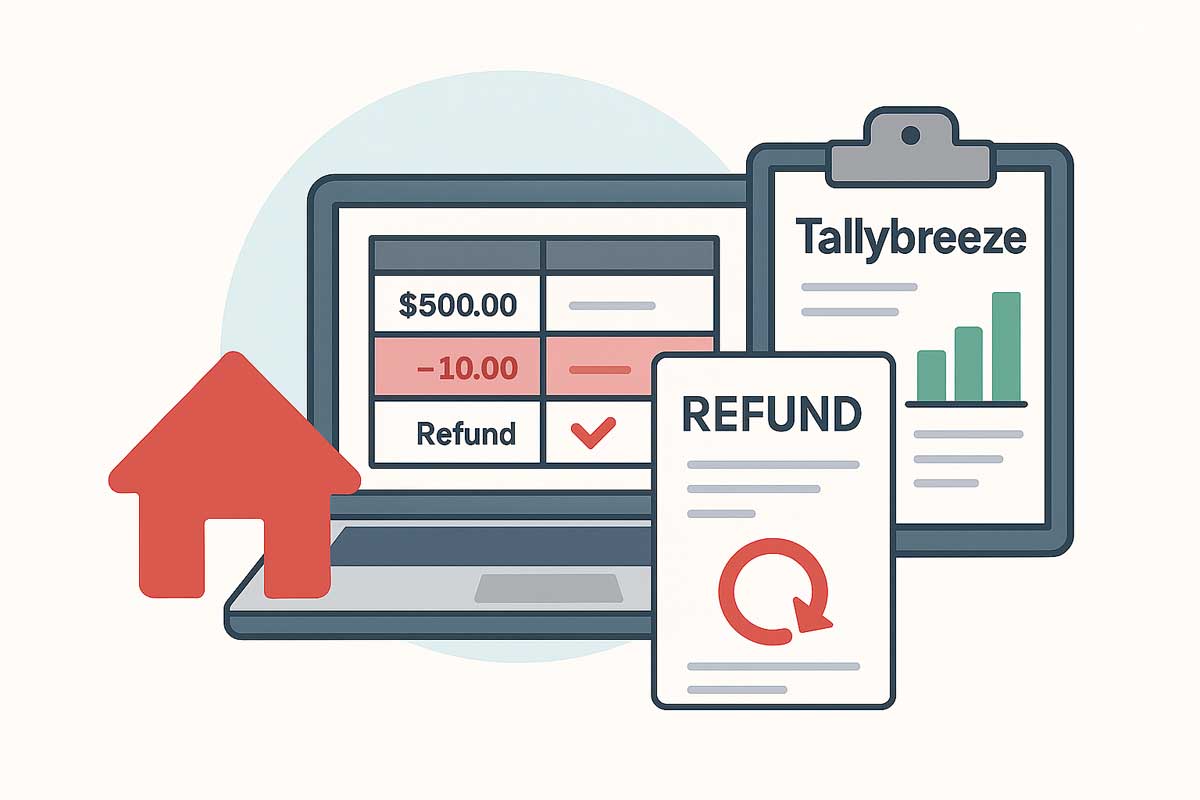
Airbnb refunds can be easy to miss and even easier to misrecord. This guide explains how to sync and reconcile Airbnb refunds in QuickBooks, avoid common accounting errors, and automate accurate refund tracking using Tallybreeze.
Read More How to Sync and Reconcile Airbnb Refunds in QuickBooks with Tallybreeze

This annual bookkeeping checklist covers essential year-end steps — from validating revenue and reconciling taxes to issuing 1099s and delivering clean financials to your tax advisor. It’s not just about compliance. Proper short term rental year end accounting provides the clarity to refine strategy, control costs, and plan disciplined growth in the year ahead.
Read More Annual Airbnb Accounting Checklist for Accounting Firms and Operators
Once the month-end close is complete, finalize and deliver a structured financial reporting package. This guide explains how Airbnb operators and accountants can compile income statements, balance sheets, cash flow reports, and property-level summaries to provide clear financial insight to stakeholders.
Read More Finalize and Deliver Financial Reports | Monthly Airbnb Accounting Checklist

Closing the books each month is only the beginning of effective financial management. This guide explains how Airbnb operators and accountants can analyze financial statements and cash flow to identify trends, evaluate performance drivers, and make more informed strategic decisions.
Read More Strategic Financial and Cash Flow Review | Monthly Airbnb Accounting Checklist

Key performance indicators (KPIs) help explain the drivers behind your short-term rental portfolio’s financial results. This guide explains how Airbnb operators and accountants can track revenue, profitability, and operational metrics to identify trends, improve performance, and make more informed decisions.
Read More Review Monthly KPIs | Monthly Airbnb Accounting Checklist

The balance sheet provides a snapshot of what your short-term rental business owns, what it owes, and the equity remaining. This guide explains how Airbnb operators and accountants should review key balances, verify assets and liabilities, and resolve discrepancies to maintain accurate Airbnb accounting.
Read More Balance Sheet Integrity Check | Monthly Airbnb Accounting Checklist

The income statement provides a high-level view of your short-term rental portfolio’s financial performance. This guide explains how Airbnb operators and accountants should review the month-end Profit & Loss, verify revenue against occupancy, analyze major expenses, and investigate variances to ensure accurate Airbnb accounting.
Read More Income Statement Controls | Monthly Airbnb Accounting Checklist

Prepaid expenses such as insurance, advanced HOA fees, and annual subscription dues often cover multiple months. This guide explains how short-term rental operators and accountants should amortize prepaid costs so expenses align with the periods they benefit, ensuring accurate Airbnb accounting and clearer monthly financial reporting.
Read More Properly Amortize Prepaid Expenses | Monthly Airbnb Accounting Checklist

Accounts receivable represents revenue that has been earned but not yet collected. This guide explains how short-term rental operators and accountants should review receivable balances, monitor aging reports, and follow up on overdue invoices to maintain accurate Airbnb accounting and protect cash flow.
Read More Review Outstanding Accounts Receivable | Monthly Airbnb Accounting Checklist

Accounts payable represents the bills your short-term rental business owes to vendors for services already received. This guide explains how to review outstanding invoices, reconcile vendor statements, and generate an accounts payable aging report to maintain accurate Airbnb accounting and disciplined short-term rental bookkeeping.
Read More Review Outstanding Accounts Payable | Monthly Airbnb Accounting Checklist
Payroll requires careful oversight and timely compliance to ensure wages, tax liabilities, and benefit deductions are recorded accurately. This guide explains how short-term rental operators and accountants should review payroll activity, verify payroll taxes, reconcile liability accounts, and maintain compliant Airbnb accounting each month.
Read More Manage Payroll Obligations | Monthly Airbnb Accounting Checklist

Occupancy taxes collected from guests are funds held in trust, owed to government authorities — not revenue for your business. This guide explains how Airbnb operators and accountants should reconcile occupancy tax liabilities, identify required filings, and remit payments on time to maintain compliant Airbnb accounting and accurate short-term rental bookkeeping.
Read More Remit Occupancy Taxes Due | Monthly Airbnb Accounting Checklist
Portfolio-level numbers can hide performance issues within individual listings. Generating property-level income statements ensures each Airbnb property stands on its own financially, allowing operators and accountants to analyze revenue, control expenses, compare performance across listings, and maintain disciplined short-term rental bookkeeping.
Read More Generate Property-Level Financial Statements | Monthly Airbnb Accounting Checklist

Uncoded expenses and unreconciled transactions can quietly distort the financial picture of a short-term rental business. This guide explains how Airbnb operators and accountants should record remaining bills, allocate expenses by property, and reconcile outstanding transactions to maintain accurate Airbnb accounting and reliable financial statements.
Read More Properly Reconcile Remaining Month-End Transactions | Monthly Airbnb Accounting Checklist

Occupancy taxes collected from guests are not revenue—they are liabilities held in trust until remitted to local jurisdictions. Properly recording and reconciling these taxes ensures your financial statements remain accurate, prevents revenue misclassification, and keeps your short-term rental bookkeeping compliant and audit-ready.
Read More Month-End Occupancy Tax Reconciliation | Monthly Airbnb Accounting Checklist

Reservation reconciliation is a critical step in Airbnb accounting. Because platform payouts often bundle multiple reservations, fees, and adjustments into a single deposit, each reservation must be recorded on a detailed line-item basis and allocated to the correct accounts. This process ensures accurate revenue recognition and clean, reliable books.
Read More Month-End Airbnb Reservation Reconciliation | Monthly Airbnb Accounting Checklist

A disciplined month-end process is the foundation of accurate Airbnb bookkeeping. This checklist walks through the essential steps — from reservation and occupancy tax reconciliation to property-level reporting, KPI review, and strategic cash flow analysis — ensuring your financials are clean, compliant, and decision-ready each month.
Read More Monthly Airbnb Accounting Checklist for Accounting Firms and Operators

Reviewing KPIs turns Airbnb bookkeeping into actionable strategy. By tracking occupancy, ADR, NOI, expense ratios, and guest performance metrics each week, short-term rental operators can identify underperforming properties early and make data-driven decisions that protect margins and support growth.
Read More Review KPIs That Matter | Weekly Airbnb Bookkeeping Checklist

A cash flow forecast provides visibility into what is coming in, what is going out, and when. This control helps short-term rental operators maintain liquidity, plan for growth, and make informed decisions beyond historical Airbnb bookkeeping reports.
Read More Proper Cash Flow Forecasting | Weekly Airbnb Bookkeeping Checklist

Direct bookings require disciplined invoicing and payment tracking. This weekly control explains how to issue invoices, apply payments correctly, and review your Accounts Receivable report to maintain accurate Airbnb bookkeeping and predictable cash flow.
Read More How to Manage Accounts Receivable | Weekly Airbnb Bookkeeping Checklist

A disciplined Accounts Payable process protects cash flow and strengthens internal controls. This weekly bookkeeping control explains how to review AP reports, verify and approve vendor bills, process payments securely, and maintain 1099 compliance in professional Airbnb bookkeeping.
Read More How to Manage Accounts Payable | Weekly Airbnb Bookkeeping Checklist

Running payroll requires approval, accurate processing, and proper accounting entries. This weekly control ensures labor costs and payroll tax liabilities are recorded correctly, keeping your Airbnb bookkeeping compliant and financially reliable.
Read More Best Practices for Running Payroll | Weekly Airbnb Bookkeeping Checklist
Payroll is one of the largest operating costs in short-term rental businesses. This weekly bookkeeping control explains how to review and approve hours, sync payroll accurately, and maintain updated employee records to ensure compliant, accrual-based Airbnb bookkeeping.
Read More How to Prepare Payroll | Weekly Airbnb Bookkeeping Checklist

Airbnb payouts rarely reflect your true earnings. Learn how to break down each reservation, properly categorize every line item, and simplify reconciliation in Xero—especially with Tallybreeze automating the entire process.

Clear weekly communication prevents reconciliation delays. This control explains how to use a suspense account for unclear transactions and send structured client questions so your Airbnb bookkeeping stays accurate, timely, and audit-ready.
Read More Getting Timely Answers from Clients | Weekly Airbnb Bookkeeping Checklist

Uncategorized transactions erode financial clarity. This weekly bookkeeping control explains how to review and properly categorize all remaining bank and credit card activity — from property expenses to software subscriptions — to maintain accurate, accrual-based Airbnb bookkeeping.
Read More Properly Reconcile All Remaining Transactions | Weekly Airbnb Bookkeeping Checklist

Proper Controls for Mortgage, Rent & Property Management Bills | Weekly Airbnb Bookkeeping Checklist
Mortgage payments, lease obligations, and property management fees are often the largest fixed costs in short-term rental operations. This weekly bookkeeping control explains how to allocate principal and interest correctly, record rent and management fees properly, and maintain accurate, property-level Airbnb bookkeeping.
Maintenance expenses directly impact property-level profitability and long-term asset value. This weekly bookkeeping control explains how to record contractor bills in detail, categorize repairs properly, distinguish operating expenses from capital improvements, and maintain accurate, accrual-based Airbnb bookkeeping.
Read More Proper Controls for Maintenance Contractor Bills | Weekly Airbnb Bookkeeping Checklist

Utilities and association fees are core operating costs in short-term rentals. This weekly bookkeeping control explains how to record recurring bills under accrual accounting, categorize them consistently, and allocate expenses properly by property to maintain accurate Airbnb bookkeeping and reliable profitability reporting.
Read More Proper Controls for Utility & Association Bills | Weekly Airbnb Bookkeeping Checklist

Cleaning expenses are one of the largest variable costs in short-term rental operations. This weekly bookkeeping control explains how to record contractor bills in detail, allocate expenses to the correct property, and maintain accurate, accrual-based Airbnb bookkeeping that supports true profitability analysis.
Read More Proper Controls for Cleaning Contractor Bills | Weekly Airbnb Bookkeeping Checklist

Learn how to handle advanced guest deposits in QuickBooks Online correctly. Understand deferred revenue, proper accrual accounting, and how Tallybreeze automates deposit tracking and revenue recognition to keep your financials accurate and audit-ready.
Read More How to Handle Advanced Guest Deposits in QuickBooks Online

Guesty payouts reflect net deposits—not true revenue—because fees, refunds, and taxes are deducted before funds reach your bank. Recording only the deposit can misstate your financials and create audit risks. This guide explains how to properly reconcile Guesty payouts in QuickBooks Online and how Tallybreeze automates the process to keep your books accurate and audit-ready.
Read More How to Reconcile Guesty Payouts in QuickBooks Online
Occupancy taxes collected from guests are not revenue — they are liabilities. This weekly bookkeeping control explains how to record lodging taxes properly at the reservation level, allocate them to the correct liability accounts, and reconcile them accurately to maintain clean, compliant short term rental accounting.
Read More How to Reconcile Airbnb Occupancy Taxes | Weekly Airbnb Bookkeeping Checklist
Accurate Airbnb bookkeeping starts at the reservation level. This weekly bookkeeping checklist explains how to record each reservation properly, allocate line items under accrual accounting, and reconcile bundled payouts to maintain clean, audit-ready short term rental accounting.
Read More How to Reconcile Airbnb Reservations | Weekly Airbnb Bookkeeping Checklist

Operating Airbnb listings is a business that requires consistent weekly financial oversight. This checklist guides short-term rental operators through reconciliation, tax tracking, expense allocation, payroll, cash flow forecasting, and KPI review—helping operators maintain clean books and build scalable, profitable operations.
Read More Weekly Airbnb Bookkeeping Checklist for Accounting Firms and Operators
An in-depth discussion about Guesty accounting and bookkeeping using popular accounting software, QuickBooks. Accordingly, we provide chart of account templates, show how to properly classify transactions, discuss financial reporting, vacation rental taxes and overview how to automate vacation rental bookkeeping. We link to various business models, including property managers, property owners, co-hosts and arbitrage operators.
For short-term rentals, many jurisdictions do not require licensing or strict trust accounting rules for managing short-term stays on behalf of owners. In this guide, we present an alternative accounting method for those in vacation rental property management who do not use a trust account.
Read More QuickBooks for Guesty: Property Management without Trust Accounting
This guide is a comprehensive method of accounting for those who need to follow thorough accounting guidelines due to state or local requirements around trust accounts. The trust account itself is delegated by a bank or financial institution for (usually) licensed property managers or real estate brokers to collect funds on behalf of property owners.
Read More QuickBooks for Guesty: Trust Accounting for Property Managers
Rental Arbitrage is a business model where an operator rents a property from an owner on a master lease and subleases said property to guests on Airbnb, Vrbo or their own Guesty direct booking website. This business model thrives in markets where vacation rental short-term income potential is higher than local long-term rental prices.
Read More QuickBooks for Guesty: Rental Arbitrage Accounting
A vacation rental investment property is a business model in which an operator purchases a property and lists it on platforms such as Airbnb, VRBO or their own direct-booking website, with the goal of building equity more quickly than with a traditional long-term rental. This model is especially effective in markets where short-term rental income potential significantly exceeds local long-term rental rates.
Read More QuickBooks for Guesty: Investment Property Accounting

How to account for vacation rental costs for owners and operators across various business models. We’ve compiled a list of the most common expenses involved in running a vacation rental business. Included is a sample chart of accounts that you can use to set up QuickBooks for your vacation rental operation.
An in-depth discussion about Vrbo accounting and bookkeeping using popular accounting software, QuickBooks. Accordingly, we provide chart of account templates, show how to properly classify transactions, discuss financial reporting, vacation rental taxes and overview how to automate vacation rental bookkeeping. We link to various business models, including property managers, property owners, co-hosts and arbitrage operators.
A QuickBooks guide to automate accounting for Vrbo property managers who use a trust account to collect funds from Vrbo on behalf of property owners. This guide is a comprehensive method of accounting for those who need to follow thorough accounting guidelines due to state or local requirements around trust accounts.
Read More QuickBooks for Vrbo: Trust Accounting for Property Managers
A method of accounting for those using QuickBooks to manage properties on Vrbo who do not use a trust account. Rather than using a trust account, all funds are directly collected from Vrbo and declared as income by the property management company. From there, a portion is paid out to owners as a direct cost.
Read More QuickBooks for Vrbo: Property Management without Trust Accounting

A guide for Vrbo Co-Host accounting and automation in QuickBooks for those Co-Hosts who receive their revenue from the property owner. Chart of accounts and example monthly owner statements included.
This accounting guide is for operators running Vrbo rental-arbitrage listings using QuickBooks. In this business model, you rent a property from an owner under a master lease and then sublease it to guests on Vrbo. Because profitability depends on accurate financial tracking, this guide will help you set up and streamline your accounting workflows to support a well-run and scalable operation.
This guide walks Vrbo investment property owners through setting up accurate revenue accounting in QuickBooks, from using a tailored chart of accounts to automating reservations with Tallybreeze. Learn how to streamline workflows, handle taxes, and generate meaningful reports to track the performance of each property.
Read More QuickBooks for Vrbo: Investment Property Accounting

If you manage or own a property on Vrbo, you can get burned at tax time if you’re not careful with how you interpret Vrbo’s 1099-K. The topic of this article is about the numbers Vrbo reports to the IRS in their 1099-K for each Host, these numbers are higher than what is actually paid out.
In this article, we discuss Vrbo Costs throughout several business models and have compiled a list of the most common costs involved in operating a Vrbo business. We present here a chart of accounts, which you can use to set up QuickBooks or Xero for your Vrbo and Vacation Rental organization.

An accounting method in Xero for property managers handling Airbnb listings without a trust account. All funds are collected directly from Airbnb and recorded as income by the property management company, with the owner’s share paid out as a direct cost.
Read More Xero for Airbnb: Property Management without Trust Accounting

A Xero guide to automate trust accounting for property managers of Airbnb listings. This guide is a comprehensive method of accounting for those who need to follow thorough accounting guidelines due to state or local requirements around trust accounts.
Read More Xero for Airbnb: Trust Accounting for Property Managers

This guide walks you through how to set up and automate Airbnb Co-Host accounting in Xero. You’ll learn how the Co-Host business model works, how to use a tailored chart of accounts, how to automate invoice creation with Tallybreeze, and how to manage owner payments and monthly reporting with accuracy and ease.

This guide walks you through how to properly set up, manage, and automate Airbnb Arbitrage accounting in Xero. You’ll learn how the business model works, how to use a tailored chart of accounts, how to automate reservation syncing with Tallybreeze, and how to run accurate reports that help you scale with confidence.

This comprehensive guide walks Airbnb property investors through setting up accounting in Xero, from chart of accounts configuration to automating reservations. Learn how to streamline workflows, manage taxes, and generate clear monthly reports for each property.
This guide explains property management accounting in QuickBooks for Airbnb listings – without using a trust account. You’ll learn how to set up a streamlined chart of accounts, automate Airbnb revenue processing with Tallybreeze, handle owner payouts, manage taxes, and generate monthly reports. If your jurisdiction doesn’t require trust accounting, this simplified method provides an efficient and transparent way to run your property management accounting.
Read More QuickBooks for Airbnb: Property Management without Trust Accounting
This guide walks Property Managers through the exact steps needed to manage Trust Accounting for Airbnb in QuickBooks. You’ll learn how to set up a proper chart of accounts, perform three-way trust reconciliation, automate reservation accounting with Tallybreeze, and execute common workflows such as owner payouts, commissions, tax remittances, and expense handling. If you use a trust account to manage owner funds, this guide provides the structure and clarity you need for accurate, compliant, and scalable Airbnb accounting.
Read More QuickBooks for Airbnb: Trust Accounting for Property Managers
Co-Hosting on Airbnb can be a profitable business if your accounting system is set up correctly. This guide walks you through how to streamline and automate Airbnb Co-Host accounting using QuickBooks, including setting up a chart of accounts, creating automated workflows with Tallybreeze, and managing owner payments with clarity and accuracy. Whether you’re new to Co-Hosting or refining your existing process, this guide provides the structure you need to stay organized and compliant.
Rental arbitrage on Airbnb can be highly profitable, but success depends on accurate, efficient accounting. This guide shows you how to set up and automate Airbnb income tracking in QuickBooks—using the right chart of accounts, reservation workflows, and Tallybreeze automation tools.
Read More QuickBooks for Airbnb: Rental Arbitrage Accounting
If you own investment properties on Airbnb and use QuickBooks, understanding how to properly record and automate your Airbnb income is essential. This guide breaks down everything you need—from chart of accounts setup to automated revenue workflows—so you can manage your portfolio with clarity and confidence.
Read More QuickBooks for Airbnb: Investment Property Accounting
This guide breaks down the essential costs of running an Airbnb business and provides a complete chart of accounts for QuickBooks and Xero. Use it to track expenses accurately, negotiate smarter, and make stronger financial decisions.

Bnbtally has officially rebranded to Tallybreeze. While the name is new, the company, team, and trusted service remain the same. This evolution reflects our expanded integrations beyond Airbnb and our long-term vision for a broader, more powerful platform.

Airbnb is phasing out the split-fee model and moving all hosts to a 15.5 percent host-only service fee. This article explains who is affected, when the changes take effect, how the new structure impacts pricing, VAT requirements, and net earnings, and why accurate fee tracking is now more important than ever for hosts and property managers.
Read More Airbnb’s Move Towards Host-Only Fees and How This Affects Hosts